


Should the skin of dry saucisson be eaten?
Charcuterie Saucisson FuetSaucisson is a food enjoyed by charcuterie lovers. This culinary speciality is one of the essentials for a successful aperitif. The question of whether the skin of dry saucisson should be eaten divides consumers. While some find it pleasant to eat, others find the skin of dry saucisson hard to digest and remove it before eating. Should the skin of dry saucisson be eaten?
What is the skin of dry saucisson?
The skin of dry saucisson protects the cured meat during the drying process. It does not contain any significant nutritional value. The skin of dry saucisson is in fact mainly made of collagen fibres, a protein also found in bones and tendons. To place this part within the whole product, see our full feature on saucisson.
It can be:
- natural,
- synthetic or artificial,
- plastic.
Superior-quality natural casings, like most of the casings on the saucissons sold on Directos, are made of cleaned pork intestine. A skin made with natural casing is healthy and can therefore be eaten without any risk to health. It withstands pressure well, offers good adhesion during seasoning and stays supple for easy handling.
For economic reasons, some makers offer a synthetic skin. This can be a blend of collagen of animal or plant origin. This skin is thin, resistant to mould, but lacks flavour and smell. The skin can also be made of a blend of collagen and reinforced cellulose, in which case you lose nothing by removing it. The skin of dry saucisson can also be made from plastic. It is easily recognised by its texture.
Why eat the skin of dry saucisson?
Fans of dry saucisson skin eat it for its taste qualities. The skin is said to add extra savouriness to the meat. Its salty and flavourful taste complements the flavour of the pork. It is therefore entirely possible to eat it and enjoy its firm texture when it comes to an artisan-made saucisson, and therefore a natural casing.
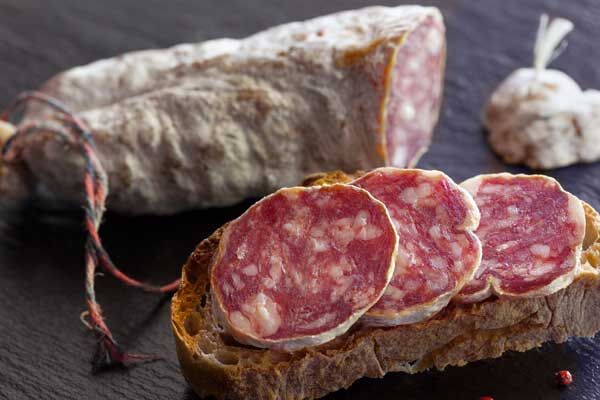
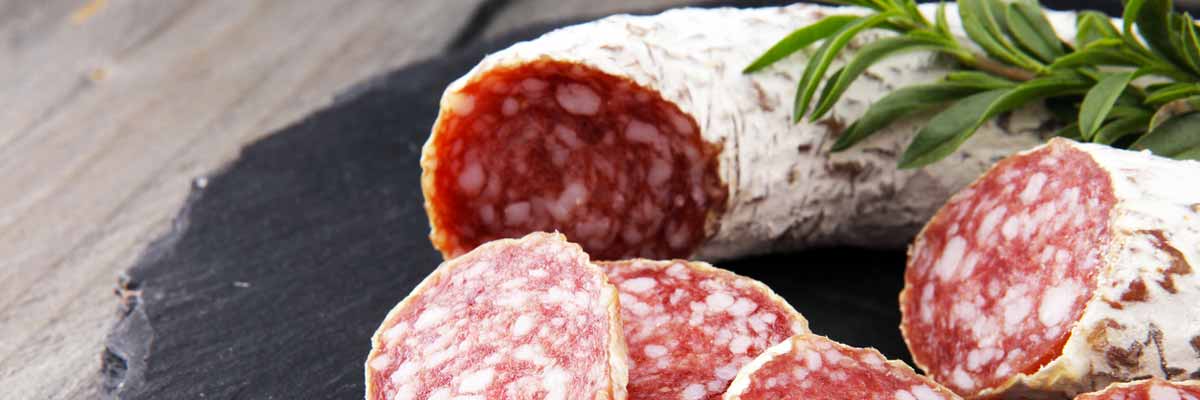
Moreover, a saucisson made properly has a skin of natural pork casing with a natural bloom. Edible and protective against pathogenic microorganisms, it can show a white, yellow or black colouring. On the other hand, a greenish substance and a bad smell are signs of deterioration. The whiteness of the skin can also be obtained by using a powder that whitens the product. Applied to the surface of saucissons, this powder gives the illusion of a surface bloom, but adds no flavour to the meat.
To better enjoy the skin of the saucisson, it is therefore essential to choose traditional products. Saucissons made using artisan know-how are renowned for having a unique and authentic flavour thanks to the techniques used. They contain no artificial additives and are made with high-quality ingredients.
Is it better to remove the skin of dry saucisson before eating it?
For people who do not like the skin of dry saucisson, this part of the cured meat is hard to chew. They find it too thick, too tough, with an unappealing taste.
Some people may also struggle to digest this part of the dry saucisson. If you have digestive issues or are sensitive to certain foods, you should avoid eating it. The same applies if the skin is a synthetic or plastic version. Eating the skin of the saucisson therefore depends on what the maker adds to it.
For a better tasting experience, choose saucissons that are as good inside as outside. There is a variety of flavours and textures with several ingredients so that everyone finds what they enjoy. Opt for a saucisson made with natural casings and dried under the best conditions.
How to remove the skin of dry saucisson?
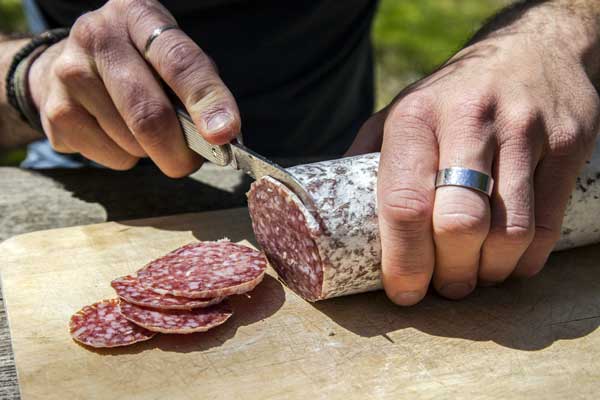
You can ask your charcutier to remove the skin before selling you the saucisson if you do not want it. Note that the skin will be harder to remove if the saucisson is too dry. In that case, it is necessary to moisten the saucisson with cold water. Then it must be dried properly with a clean cloth so that the meat does not lose its qualities. Then make a cut in the meat and the skin will come away on its own. This technique only works on natural casings and not on synthetic skins.
We recommend storing your dry saucissons carefully to protect the meat from mould. Store your saucissons wrapped beforehand in a clean airtight bag and place them in a cool spot. Dry saucissons do not tolerate excess heat or cold. A temperature between 10 and 20 °C is ideal for preserving the flavour of the cured meat. You can also leave your dry saucisson at room temperature in the kitchen. Storing these products can last several weeks, even several months.
Opinions are therefore very divided when it comes to eating the skin of dry saucisson. It is therefore essential to form your own experience to decide whether you should remove it or keep it.
Learn more
Receive our new products, our tips and our promotions directly in your email box
You may well receive a surprise when you subscribe... 🤞
We will only send you information related to our site, only twice a month, and you can unsubscribe at any time!