


Catalan fuet vs other saucissons: the differences and particularities
Spanish charcuterie Catalan fuet FuetThe Catalan fuet is a Spanish dry saucisson much appreciated for its unique taste and firm texture. What makes this cured meat so special compared to others? Directos.eu shows you the distinctive features of Catalan fuet and its differences from other saucissons. Garlic, pepper, olives, ceps or Roquefort: all our Spanish fuets come in sixteen recipes.
What are the distinctive features of Catalan fuet?
Also called Espetec, Catalan fuet is a dry saucisson originating from Catalonia. It has many distinctive features that have built its reputation.
The ingredients
Catalan fuet is made from superior-quality pork. To this are added ingredients such as garlic, black pepper and Espelette pepper. Unlike other saucissons, it contains no paprika, a common ingredient in Spanish cooking.
These ingredients are mixed with pork fat and salt, then minced and kneaded until a smooth paste is obtained. The mixture is then filled into natural casings and hung to dry in open air for several weeks. The flavours of the famous Catalan fuet vary from one maker to another.
The making method
Catalan fuet is made using a traditional open-air drying method over a few weeks. This technique gives it a firm, compact texture that allows it to keep well over time. The Catalan cured meat we offer at Directos.eu can be kept for about six months in your kitchen without spoiling.
This open-air drying method is important, as it allows the flavours to concentrate in the fuet. Drying time depends on certain factors such as temperature, humidity and the size of the saucissons. During the drying process, the famous Catalan fuet loses water and develops intense flavours and aromas.
The open-air drying method is crucial, as it allows for slow, gradual curing of the saucisson. Once drying is complete, the saucissons are ready to be eaten. Catalan fuet can be enjoyed on its own as an aperitif or a starter, or used as an ingredient in other recipes.
The shape of Catalan fuet
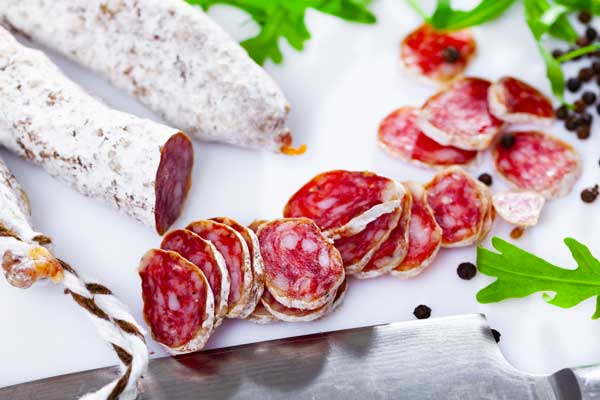
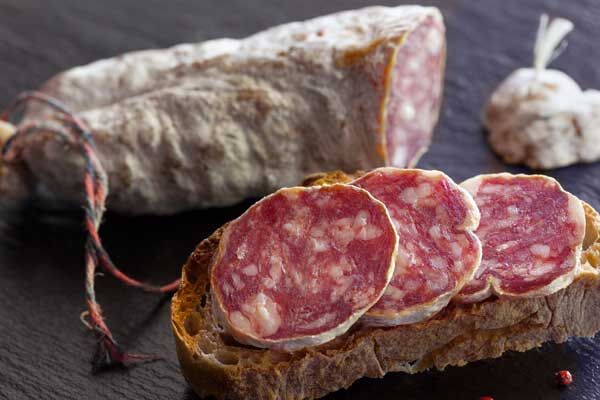
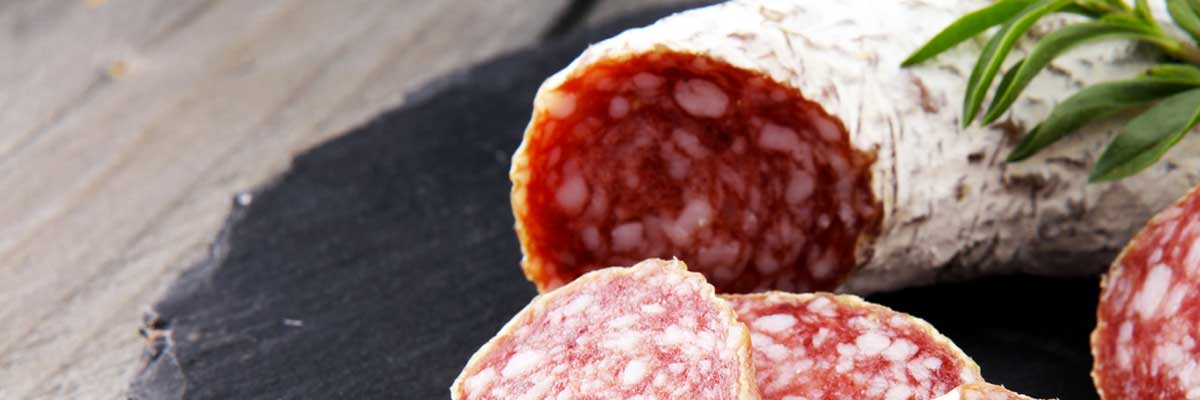
Catalan fuet comes in the form of long, thin, straight sausages. It is about 20 to 25 cm long and 2 to 3 cm in diameter. This thin, straight shape sets it apart from thicker, rounder saucissons, such as French saucisson or salchichón.
This cured meat is a dry saucisson, long and thin, generally straight. This particular shape is obtained by filling the paste into a natural pork casing, which gives it its cylindrical shape.
It is then held in place during open-air drying, where the saucisson firms up and solidifies. The cylindrical shape of Catalan fuet is practical for slicing into thin rounds. It lets you hang it easily during drying and makes it easier to transport and store.
What are the distinctive features of other saucissons?
Other dry saucissons, besides Catalan fuet, also have specific features worth knowing.
French dry saucisson
Made in many French regions, dry saucisson is often made of pork, fat and seasonings. It is dried for a month to get a firm texture and a strong taste. French dry saucisson stands out through its taste, which varies by region and maker.
Dry saucisson from Auvergne, for example, is most often smoked, while that from Lorraine can contain white wine. Dry saucisson from Lyon, for its part, is generally flavoured with pistachios.
The choice of meats used can also vary from one region to another. Some varieties of French dry saucisson mainly contain pork, while others may contain beef or mutton.
Spanish chorizo
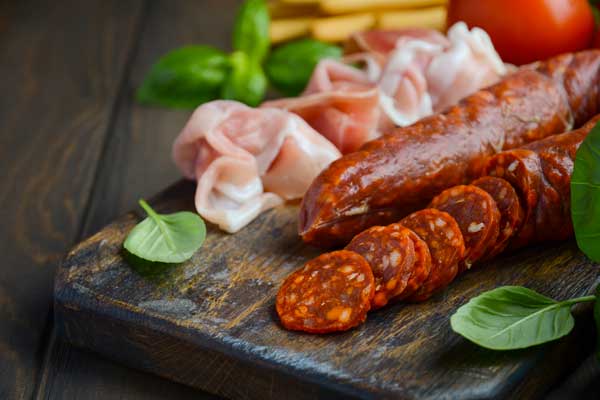
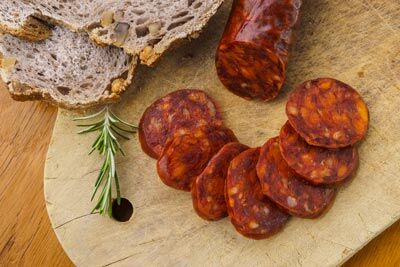
Spanish chorizo is a traditional dry saucisson from Spanish charcuterie, originating from the La Rioja region. It is often made from pork, although some varieties may also contain beef. Chorizo is spicy and coloured red thanks to paprika, a spice that gives it its characteristic taste.
The making method for Spanish chorizo varies by region and maker. Generally, the meat is minced, then mixed with the spices: paprika, garlic, salt and pepper. The meat is then filled into natural or artificial casings, then dried for about four weeks.
Some varieties of chorizo are smoked, which gives them an even stronger taste. The distinctive features of Spanish chorizo lie in its spicy taste, its firm and juicy texture. The different varieties of chorizo can also vary depending on the ingredients used and the making method.
Italian salami
Salami is made with pork, salt, garlic, pepper and fennel. This saucisson is often dried for several months, which gives it a firm texture and an intense taste. It has a strong presence in Italian cooking, found notably on pizzas and in sandwiches.
The making method for Italian salami is fairly similar to that of Catalan fuet. The meat is minced, then mixed with the spices and other ingredients. It is then filled into natural or artificial casings, then dried for at least two weeks.
The distinctive features of Italian salami lie in its taste and texture, which vary depending on the ingredients used. The different regions of Italy have their own varieties of salami, each with its own specific features and flavours.
Learn more
Receive our new products, our tips and our promotions directly in your email box
You may well receive a surprise when you subscribe... 🤞
We will only send you information related to our site, only twice a month, and you can unsubscribe at any time!